Webflow Input Enhancer
For the best experience, this project uses the Webflow Input Enhancer extension. We highly recommend installing it. Click here to download (use preview mode to access link)
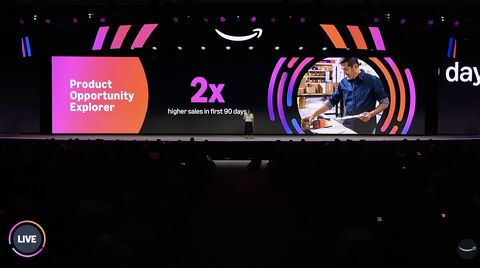
To find profitable product opportunities in 2026, look for niches where customer demand is growing but existing products leave gaps, then confirm the economics before you commit to inventory. Amazon's Product Opportunity Explorer helps with the first part by showing niche demand, competition, search terms, reviews and returns. Your own margin math and brand plan handle the rest.
Key takeaways
Launching a product used to follow a simple script: pick something that looks hot, pour money into ads, and let rankings do the rest. That script is broken.
Brandon Fishman, founder of Prime Team, has argued on LinkedIn that once you stack advertising costs on top of Amazon's all-in take rate, which he estimates at around 40%, many new launches lose money before product costs are even counted. His advice is to build demand first and let Amazon close the sale.
That moves the most important decision upstream. Choosing the right product, in the right niche, with real evidence of demand, now matters more than any single ad tactic. A great campaign cannot rescue a product nobody is looking for, and a saturated niche can quietly drain your budget.
Product Opportunity Explorer is a free tool inside Seller Central that uses Amazon's own data to show where customer demand is not being met. You open it from the Growth menu in Seller Central, and it groups products into niches, which are collections of search terms built from what customers view and buy after searching.
Inside the tool you can:
Access requires a selling account, and Amazon lists the Professional plan at $39.99 a month plus selling fees.
Amazon also reports that new products launched from niches viewed in the tool had 2.5x higher sales potential in their first three months, based on its own 2025 internal study. That is a useful signal, but it is not a promise. Amazon is clear that the tool is a guide, not a guarantee, and your own judgment still decides where to invest.
The best opportunity for a competitor may be the wrong one for you. Begin with your existing catalog, your manufacturing strengths and the customers you already serve. Product Opportunity Explorer recommends niches based on your brand, so use those suggestions as a starting shortlist, then add adjacent categories where your reputation and supply chain give you an edge.
Open a niche and review the demand trend over time. You want steady or rising search interest, not a one-week spike. Then check competition and saturation. A niche dominated by a few entrenched brands with thousands of reviews is hard to enter. A niche with healthy demand and fragmented sellers is far more promising.
Also review seasonality. A product that earns most of its revenue in eight weeks needs a different cash plan than one that sells all year.
This is where great product ideas come from. Read the customer review insights to see which features shoppers praise and which problems appear again and again. Then check return activity. High returns often point to poor sizing, quality issues or misleading listings, all of which you can fix.
Your goal is a clear product brief in one sentence, for example: "Same use case as the market leader, but fixes the durability complaint and adds the accessory customers keep buying separately."
Product Opportunity Explorer shows the search terms tied to each niche and their volume. Use them to shape your title, bullets, backend keywords and early ad campaigns. Terms that describe the customer's problem often convert better than broad category words. This also supports Amazon SEO, which we cover in our Amazon SEO services.
A promising niche is not the same as a profitable product. Before ordering, model the numbers:
If the margin only works at a perfect conversion rate, walk away or redesign the product. Profit is a design decision, not a hope.
Even good data can lead to bad decisions. Watch for these traps:
Product Opportunity Explorer is powerful, but no single tool tells the whole story. Independent guides also caution that it does not fully validate profit or launch readiness on its own, so pair it with other checks:
The strongest launches combine marketplace data with real brand demand. That is why we often pair marketplace research with channels like TikTok Shop, where creators can build awareness before the Amazon launch.
Shoppers now ask AI assistants what to buy, so your launch content should answer real questions clearly. Generative engine optimization, or GEO, favors brands with a clear identity, topical depth, third-party validation such as reviews and mentions, and direct answers to real prompts. As you launch, write listing copy and supporting content that names who the product is for, what problem it solves and how it differs from alternatives. If you want help, see our GEO services.
Finding an opportunity is only the first step. Prime Team was named Agency Partner of the Year by Amazon Supply Chain Services in 2026, and we manage more than $600 million in annual Amazon GMV for 65+ brands. Our team supports the full launch path, from research and listing strategy to Amazon PPC and full-service Amazon management. For a look at what a well-planned launch can do, read how BREZ generated $233K in first-month sales after Prime Team owned its Amazon launch in our case study.
Profitable product opportunities are found, not guessed. Start with your brand, study niche demand and competition, read reviews and returns for the gap, choose search terms with intent, and prove the profit before you buy inventory. Use Product Opportunity Explorer as your starting point, and back it with your own numbers and off-Amazon demand.
Ready to pressure-test a product idea before you invest? Request a free account audit and our team will help you decide what to launch, and how.
Q. How do I find profitable products to sell on Amazon in 2026?
Ans. Start by researching niches where demand is growing and competition is beatable. Use Amazon's Product Opportunity Explorer to review demand trends, search terms, customer reviews and returns, then confirm your margins after fees, ads and returns before ordering inventory.
Q. What is Amazon Product Opportunity Explorer?
Ans. It is a Seller Central tool that uses Amazon data to show niches, search volume, competition, customer reviews and unmet demand, so sellers can identify product ideas backed by real shopper behavior instead of guesswork.
Q. Is Amazon Product Opportunity Explorer free?
Ans. There is no separate charge for the tool, but you need an Amazon selling account. Amazon lists the Professional selling plan at $39.99 per month plus selling fees, so check current pricing before you sign up.
Q. How do I access Product Opportunity Explorer?
Ans. Log in to Seller Central and choose Growth, then Product Opportunity Explorer. If you do not have a selling account yet, you need to register for one first.
Q. What is a niche in Product Opportunity Explorer?
Ans. A niche is a group of related search terms built from the products customers view or buy after searching. Each niche represents a specific customer need, which makes it easier to assess demand and competition.
Q. What does "unmet demand" mean on Amazon?
Ans. Unmet demand refers to groups of similar search terms that convert below Amazon's benchmark. That pattern suggests shoppers are searching but not finding what they want, which can signal high demand with lower competition.
Q. What makes a product opportunity profitable?
Ans. A profitable opportunity combines steady demand, manageable competition, a price that supports healthy margins after fees and advertising, and a clear product improvement based on customer feedback.
Q. How do I know if a niche is too competitive?
Ans. Warning signs include a few dominant brands with very large review counts, heavy price undercutting and high advertising costs relative to price. A fragmented niche with room for a differentiated product is usually easier to enter.
Q. Can I rely on one tool to validate a product idea?
Ans. No. Treat Product Opportunity Explorer as a strong starting point, then check margins, supplier quality, Best Sellers trends and off-Amazon demand. Amazon itself says the tool is a guide and does not guarantee results.
Q. Should I build demand outside Amazon before launching?
Ans. Often yes. With advertising and fees eating into margins, brands that build awareness through channels like TikTok Shop, creators and content can lower their reliance on paid traffic and launch with stronger momentum.