GEO and AEO Agency for Product Brands
When a buyer asks ChatGPT, Gemini or Google AI which brand to choose, the answer names a few brands. We make sure yours is one of them.
Prompt visibility tracking
Answer-ready pages and schema
Sources the AI trusts
Marketplace AI answers, including Amazon's Alexa for Shopping

What is generative engine optimization (GEO)?
Generative engine optimization (GEO) is the work of getting your brand named, cited and recommended in AI answers from ChatGPT, Gemini, Perplexity, Claude and Google AI Overviews. It covers what your pages say, how AI crawlers read them, and what other sites say about you, measured prompt by prompt.
Search has moved into the answer. In a Pew Research Center study of 900 US adults (March 2025), people clicked a search result 8% of the time when Google showed an AI summary, against 15% when it did not. If your brand is not in the answer, many buyers never reach your site.
GEO and AEO: one discipline, two names
Generative engine optimization (GEO) and answer engine optimization (AEO) describe the same work: making sure AI engines such as ChatGPT, Google AI Overviews and AI Mode, Gemini and Perplexity find your brand, understand it and recommend it when buyers ask. Some teams say GEO, others say AEO. We do both under one plan, and we measure both the same way: which answers name your brand, which sources the engines cite, and how often you are recommended over competitors.
GEO vs SEO: what is the difference?
- Goal: SEO ranks a page in search results. GEO gets your brand named in the AI answer.
- Unit of work: SEO works on keywords. GEO works on prompts, the full questions buyers ask.
- What wins: SEO rewards relevance, backlinks and page experience. GEO rewards clear answers, trusted third-party sources and consistent product data.
- How success is measured: SEO tracks position and clicks. GEO tracks named, cited or not yet, per prompt and per engine.
- Where it shows: SEO shows on the Google results page. GEO shows in ChatGPT, Gemini, Perplexity, Claude, Google AI Overviews and AI Mode, and marketplace shopping assistants.
GEO does not replace SEO. Strong pages still matter, because several AI engines draw on search results. GEO adds the work SEO does not cover: the prompts, the sources each engine trusts, and proof of where you appear.
How our GEO process works
- Measure. We run your buyers' prompts across the AI engines and record who is named today, including your competitors.
- Reverse-engineer. We compare what the winners share: the sources cited, how their pages are written, how consistent their product data is.
- Engineer. We build answer-ready pages, structured data and a connected data set for your products, tested on a staging copy before anything goes live.
- Earn sources. We work on the third-party places each engine cites for your category.
- Verify every week. Each prompt is asked again and marked named, cited or not yet, with the evidence attached.
Send us your hardest prompt and we will show you who owns the answer today.
Which AI engines do you cover?
ChatGPT, Google AI Overviews and AI Mode, Gemini, Perplexity and Claude, with Grok on larger plans. Each engine picks sources differently, so each gets its own process. For product brands we also track marketplace AI shopping answers such as Amazon's Alexa for Shopping.
Who GEO is for
- Product brands, roughly $2M to $200M in revenue, selling on their own site, Amazon, Walmart or other retailers.
- Brands whose buyers ask AI for recommendations before they buy.
- Teams that see competitors named in AI answers and want to know why.
- Brands already strong in SEO that want proof of where they stand in AI answers.
Why Prime Team for GEO
- Built for product brands. We run marketplaces every day: Amazon, Walmart and TikTok Shop. GEO for us includes product data and marketplace answers, not only blog posts.
- Evidence, not promises. You get a weekly board: every prompt, every engine, named, cited or not yet.
- Engineers ship the fixes. Changes go through staging and your sign-off before release.
Last updated: October 2026
No one can guarantee placement in an AI answer, and we do not. We guarantee the work and the evidence: what we changed, and whether each prompt is named, cited or not yet, every week.
Yes. AI shopping assistants and AI search both read product data, reviews and retailer listings. We track whether your products are named for your buyers' prompts on marketplaces as well as on your own site.
Send us the prompt you most want to win at our AI Search Review page. Our GEO team runs it and shows you who owns the answer today, and why.
Every week we ask each tracked prompt again on each engine and record one of three results: named, cited or not yet. You see the answer text and the evidence, not a single blended score.
SEO ranks pages in search results. GEO gets your brand into the answer an AI engine writes. SEO works on keywords and links; GEO works on the full questions buyers ask, the sources each engine cites, and weekly proof of whether you are named. The two work together.
There is no fixed timeline. AI engines re-read sites and change how they choose sources on their own schedule. What we commit to is weekly evidence of where you stand, prompt by prompt, so you can see progress as it happens.
Plans start at $3,500 a month, set by how competitive your category's AI answers are, not by company size. Larger plans cover more competitors and engines. Send us a prompt and we will show you where you stand first.
Yes, in practice. Generative engine optimization (GEO) and answer engine optimization (AEO) are two names for the same goal: being the brand AI engines recommend. We run them as one service and report on both.
AEO stands for answer engine optimization: getting your brand cited and recommended in the answers AI engines give, such as ChatGPT, Google AI Overviews, Gemini and Perplexity. It covers the content on your site, how engines read it, and what the rest of the web says about your brand.
GEO is the work of getting your brand named, cited and recommended in AI answers from ChatGPT, Gemini, Perplexity, Claude and Google AI Overviews. It combines answer-ready pages, structured product data and presence on the sources each AI engine trusts, measured prompt by prompt.
ChatGPT, Google AI Overviews and AI Mode, Gemini, Perplexity and Claude, with Grok on larger plans. For product brands we also track AI shopping answers on marketplaces such as Amazon's Alexa for Shopping.
We test changes on a staging copy first and release them only after your sign-off. GEO work such as clearer answers, structured data and better sources usually supports SEO as well.
Latest Blog Posts
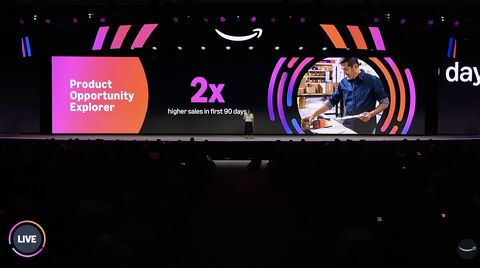
Learn how to find profitable product opportunities in 2026 using Amazon's Product Opportunity Explorer, demand signals and a simple validation framework.

Learn how Amazon Ads is integrating with ChatGPT, how Amazon DSP ads work, who can access the pilot, and what sellers should do now.

Amazon has joined the YouTube Shopping Affiliate Program. Learn how YouTube product discovery can drive Amazon branded searches, traffic, conversions, and sales.