Webflow Input Enhancer
For the best experience, this project uses the Webflow Input Enhancer extension. We highly recommend installing it. Click here to download (use preview mode to access link)
By Brandon Fishman
Every Amazon brand owner has faced it at some point.
You invest years building your brand, developing quality products, and earning customer trust. Then suddenly, unauthorized sellers appear on your listings. They slash prices, disrupt your distribution strategy, and sometimes even sell counterfeit products under your brand name.
For years, brands had limited control over who could create listings associated with their products. But in 2026, Amazon introduced a significant policy update that gives brand owners more authority over their presence on the Amazon Marketplace.
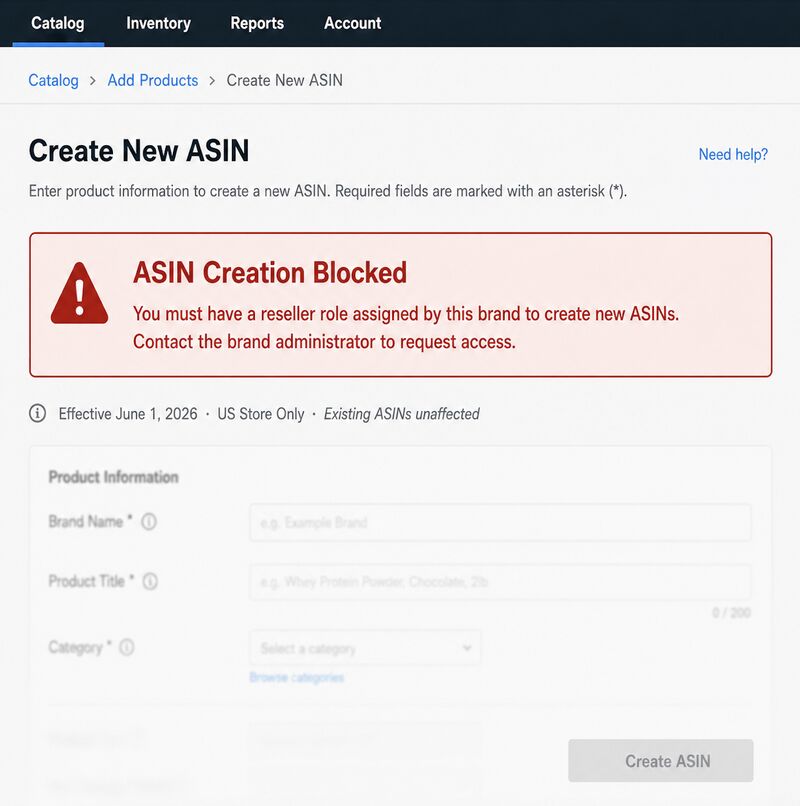
Starting June 1, sellers must have an official reseller role assigned by the brand before they can create ASINs linked to that brand. If they don't have the required authorization, Amazon blocks the action and returns Error Code 5467.
This is a major step forward for brand protection. However, many brands may not fully benefit from this change because they haven't set up their Brand Registry access, permissions, and reseller management processes correctly.
In this guide, we'll explain how to protect your brand from unauthorized resellers in 2026 and what actions you should take immediately.
Unauthorized sellers don't just create pricing issues.
They can negatively impact your entire business by:
I've watched rogue resellers trash brand pricing and flood listings with counterfeit products for years. Many brands spend thousands on advertising only to see unauthorized sellers benefit from the traffic and sales.
That's why Amazon's latest reseller authorization update matters.
It shifts more control back to the brand owner.
Amazon now requires sellers to receive an official reseller role from a registered brand before creating new ASINs tied to that brand.
Here's what brands need to know:
If a seller attempts to create a new ASIN without an approved reseller role, Amazon displays Error Code 5467 and prevents the listing from being created.
The update does not automatically remove sellers already selling your products.
Brands still need to actively monitor and manage their marketplace presence.
Amazon will not mediate reseller approval requests.
Only authorized Brand Registry administrators can assign reseller roles.
This means your internal account setup is now more important than ever.
This is where many brands fail.
Amazon's new policy only works if the right people have administrative control over your Brand Registry account.
We've seen situations where:
If your Brand Registry admin access has expired or was never configured properly, you may not be able to approve or reject reseller requests.
Review:
Think of Brand Registry access as the keys to your business. If you don't know who holds the keys, you're already at risk.
Your trademark is the foundation of your Amazon brand protection strategy.
Without an active and properly registered trademark, your control over listings, intellectual property enforcement, and reseller management becomes significantly weaker.
Make sure:
✔ Your trademark is active
✔ Ownership details are accurate
✔ Brand Registry information matches legal records
✔ International trademarks are updated where applicable
Many brands only discover trademark issues when they need to take enforcement action against an unauthorized seller.
By then, valuable time and revenue may already be lost.
As businesses grow, access permissions tend to become messy.
Employees change roles. Agencies come and go. Contractors complete projects.
Yet their account access often remains active.
This creates unnecessary risk.
Can manage Brand Registry and reseller approvals.
Can manage listings and inventory.
Can access advertising and content tools.
Can view data without making changes.
Receive limited permissions based on specific responsibilities.
Whether you're working with an Amazon PPC Agency, Amazon SEO Agency, or a full-service Amazon management partner, access should always be reviewed regularly.
Quarterly audits are strongly recommended.
Amazon has given brands a powerful tool, but you still need a process.
Instead of approving reseller requests individually without standards, create a formal reseller management framework.
Require:
Track:
An authorized reseller today may become a compliance risk tomorrow.
Regular reviews help ensure your partners continue meeting your standards.
The goal isn't simply to grant reseller access. It's to maintain a healthy and profitable marketplace ecosystem.
No policy can replace active monitoring.
Unauthorized sellers constantly look for new opportunities.
Brands that succeed on Amazon don't simply react to problems. They identify issues before they become expensive.
Watch for:
Track:
Customer reviews often reveal marketplace problems before internal teams notice them.
Pay attention to comments mentioning:
Brand protection is no longer just about Amazon.
Today, AI-powered search engines such as ChatGPT, Google AI Overviews, Gemini, and Perplexity influence buying decisions long before customers visit a marketplace.
When unauthorized sellers create inconsistent information across the web, it can weaken your brand's authority signals.
Generative engines look for:
Brands that actively manage reseller relationships are more likely to maintain accurate information across digital channels.
This improves both marketplace performance and Generative Engine Optimization (GEO).
Managing reseller relationships, marketplace compliance, advertising, and brand protection can quickly become overwhelming.
This is why many growing brands work with a Best Amazon Agency that combines:
An experienced Amazon SEO Agency can help improve product visibility, while an Amazon PPC Agency can maximize advertising performance without losing profitability to unauthorized sellers.
When these services work together, brands gain greater control over both growth and protection.
Amazon's reseller role requirement is one of the most important brand protection updates in recent years.
However, the policy alone won't protect your business.
Brands must take ownership of:
Amazon has provided the tool. Now it's up to brands to use it effectively.
The companies that establish strong controls today will be the ones that protect their pricing, reputation, and customer trust tomorrow.
Q. What is Amazon Error Code 5467?
Ans. Amazon Error Code 5467 appears when a seller tries to create an ASIN for a brand without having an approved reseller role assigned by the brand owner through Amazon Brand Registry.
Q. How can I stop unauthorized resellers from selling my products on Amazon?
Ans. Start by enrolling in Brand Registry, verifying trademark ownership, auditing admin access, managing reseller roles, and continuously monitoring seller activity and pricing violations.
Q. Does Amazon automatically remove unauthorized sellers in 2026?
Ans. No. Amazon's new policy prevents unauthorized sellers from creating new ASINs, but existing listings and sellers are not automatically removed. Brands must still actively monitor and enforce their marketplace policies.
Q. Who can assign reseller roles in Amazon Brand Registry?
Ans. Only approved Brand Registry administrators can grant reseller roles. Amazon does not mediate reseller approval requests between brands and sellers.
Q. Why should brands work with an Amazon SEO Agency or Amazon PPC Agency?
Ans. An experienced Amazon SEO Agency helps improve organic visibility and listing performance, while an Amazon PPC Agency manages advertising efficiency, competitor protection, and profitability. Together, they help brands grow while protecting their presence on the Amazon Marketplace.
Follow on Linkedin for More Stories